Defalco Dealings / On Our Radar
The Rich Man’s Bunker Is Not the Answer
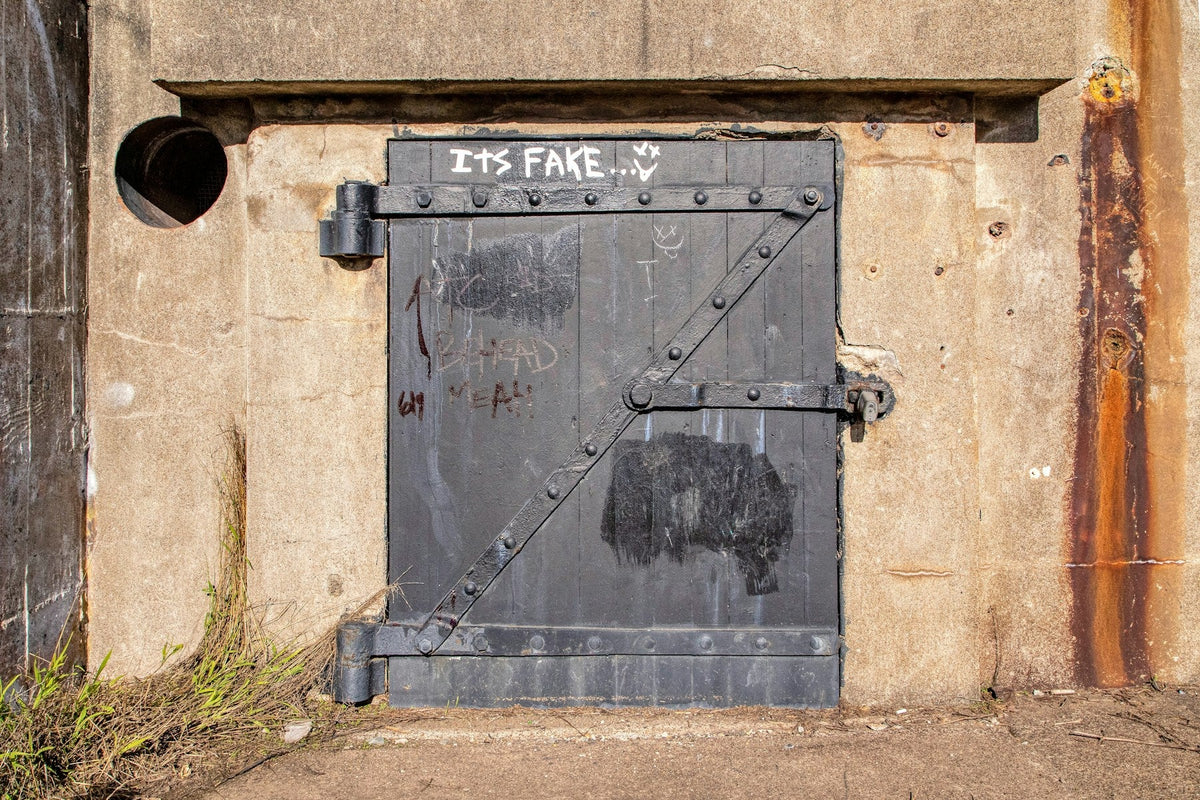
The fantasy is easy to understand.
Something goes badly wrong. You leave the city. A reinforced door closes behind you. There is food, water, power, cameras, filters, fuel and enough concrete between you and everybody else to wait out the chaos.
It is one of the cleanest fantasies in preparedness because it reduces an uncontrollable world to a controllable property.
Buy enough security and you can isolate yourself from the problem.
Except civilisation does not work like that.
You can stockpile supplies. You cannot stockpile civilisation.
A bunker can solve real problems
This article is not an argument that shelters are useless.
Physical protection matters. Safe rooms matter. Storm shelters matter. Backup power matters. Water storage matters. A remote property can offer genuine advantages in certain emergencies.
The problem begins when physical isolation gets confused with total resilience.
A bunker is a tool.
It is not a replacement society.
The fantasy assumes the crisis stays outside
A bunker works best when the threat is external, temporary and clearly defined.
A severe storm passes. Smoke clears. Violence moves elsewhere. Infrastructure returns.
But many serious disruptions are messy, prolonged and dependent on systems no private property can fully recreate.
You still need medicine. Mechanical repair. Replacement parts. Information. Skilled labour. Sanitation. Fuel. Agriculture. Security. Human judgement.
Sooner or later, the door opens.
Die Praxisnotiz
Vom Argument zum Handeln.
Nutze den Beitrag als Ausgangspunkt für eigene Fragen.
Every fortress has dependencies
Off-grid does not mean dependency-free.
Solar panels can fail. Batteries degrade. Pumps break. Filters need replacement. Diesel runs out. Wells can be contaminated. Medical needs change. Machinery requires parts.
The more sophisticated the refuge, the more systems may exist that somebody has to understand and maintain.
Extreme self-sufficiency often hides an enormous maintenance burden.
The most underrated asset is another competent person
One person knows first aid.
Another understands engines.
Another knows the local roads.
Another has tools.
Another knows which elderly neighbour lives alone.
Another can organise people without creating panic.
That network can be more resilient than any single household trying to become a miniature country.
Resilience research keeps coming back to social connection
FEMA's National Resilience Guidance describes prepared households as the foundation of resilient communities, but it also emphasises collaboration, trust and relationships between neighbours, organisations and institutions.
The guidance explicitly points to relationships with friends, family, coworkers and neighbours as important parts of resilience.
This is not sentimental.
Social connections move information, labour, transport, childcare, food, tools and help.
They turn individual shortages into shared capacity.
Knowing your neighbours is infrastructure
Modern urban life can make the people living metres away feel almost irrelevant.
You know hundreds of usernames and may not know the surname of the person next door.
That works fine while services are functioning.
During a power cut, flood, heatwave, fire or local disruption, proximity suddenly matters.
The neighbour with a ladder matters.
The neighbour with a car matters.
The neighbour who notices nobody has seen the old man at number twelve matters.
A community can do things money cannot
Money is powerful because it gives access to other people's capability.
But if the service is unavailable, purchasing power is not the same as immediate capacity.
You cannot summon a mechanic who cannot reach you.
You cannot order medicine that is not moving.
You cannot buy local trust at the moment you suddenly need it.
Relationships are built before the emergency.
The strongest property is connected, not isolated
If I were assessing a resilient home, I would not only ask how thick the walls are.
I would ask:
- Is there dependable water?
- Can the house stay habitable through a power interruption?
- Is food reasonably accessible?
- Can emergency services reach it?
- Are there useful people nearby?
- Is there a town, pharmacy, workshop or farm within practical distance?
- Does the owner understand the systems keeping the property running?
Isolation can reduce exposure to one category of risk while increasing another.
The village beats the vault
For most of human history, resilience was collective because it had to be.
No household produced every tool, food, service and skill it needed.
People traded capability.
Modern technology expanded that network globally.
The mistake would be assuming the local layer no longer matters.
This is not an argument against privacy
Privacy and community are not opposites.
You can own land, value quiet, keep your personal life private and still know who lives around you.
You can have boundaries and relationships.
You can keep emergency supplies without building an identity around expecting society to collapse.
That balance is healthier than either extreme.
The rich man’s problem
Wealth can buy an extraordinary refuge.
But the richer the fantasy becomes, the easier it is to imagine every problem has a purchasable solution.
Some things do not work that way.
Trust cannot be delivered overnight.
Reputation cannot be bought retroactively.
Community cannot be switched on after the gates close.
Competence cannot always be hired on demand.
The better preparedness model
Own useful supplies.
Reduce obvious household vulnerabilities.
Learn practical skills.
Build financial margin.
Know how to leave if necessary.
Know how to stay if necessary.
And know some people.
That last part belongs on the list.
The Defalco Dealings view
The goal of resilience is not to become unreachable by civilisation.
It is to remain functional when civilisation becomes less convenient.
Sometimes that means a generator.
Sometimes it means water.
Sometimes it means a locked door.
And sometimes it means the person across the road answering the phone.
The rich man’s bunker can protect a household. A resilient community can protect a life.
Sources & further reading
In den Alltag übertragen
Drei Gedanken zum Mitnehmen.
Diese Liste übermittelt deine Auswahl nicht. Sie wird beim Neuladen zurückgesetzt; ein Häkchen ist keine Kompetenzprüfung.
Moving to Italy: how to plan a useful scouting trip
A three-day research itinerary for comparing everyday life in two Italian neighbourhoods, with practical checks for housing, transport, work and community.
Artikel lesen →Find your Defalco Dealings guide: relocation, cities, language and preparedness
Choose the right Defalco Dealings format for your move, trip, first conversations, household planning or personalised research brief.
Artikel lesen →Build an offline planning folder before you need it
A straightforward way to organise useful documents, household checklists and preparedness reading without turning preparation into a prediction.
Artikel lesen →