Defalco Dealings / On Our Radar
The Men Who Still Know How
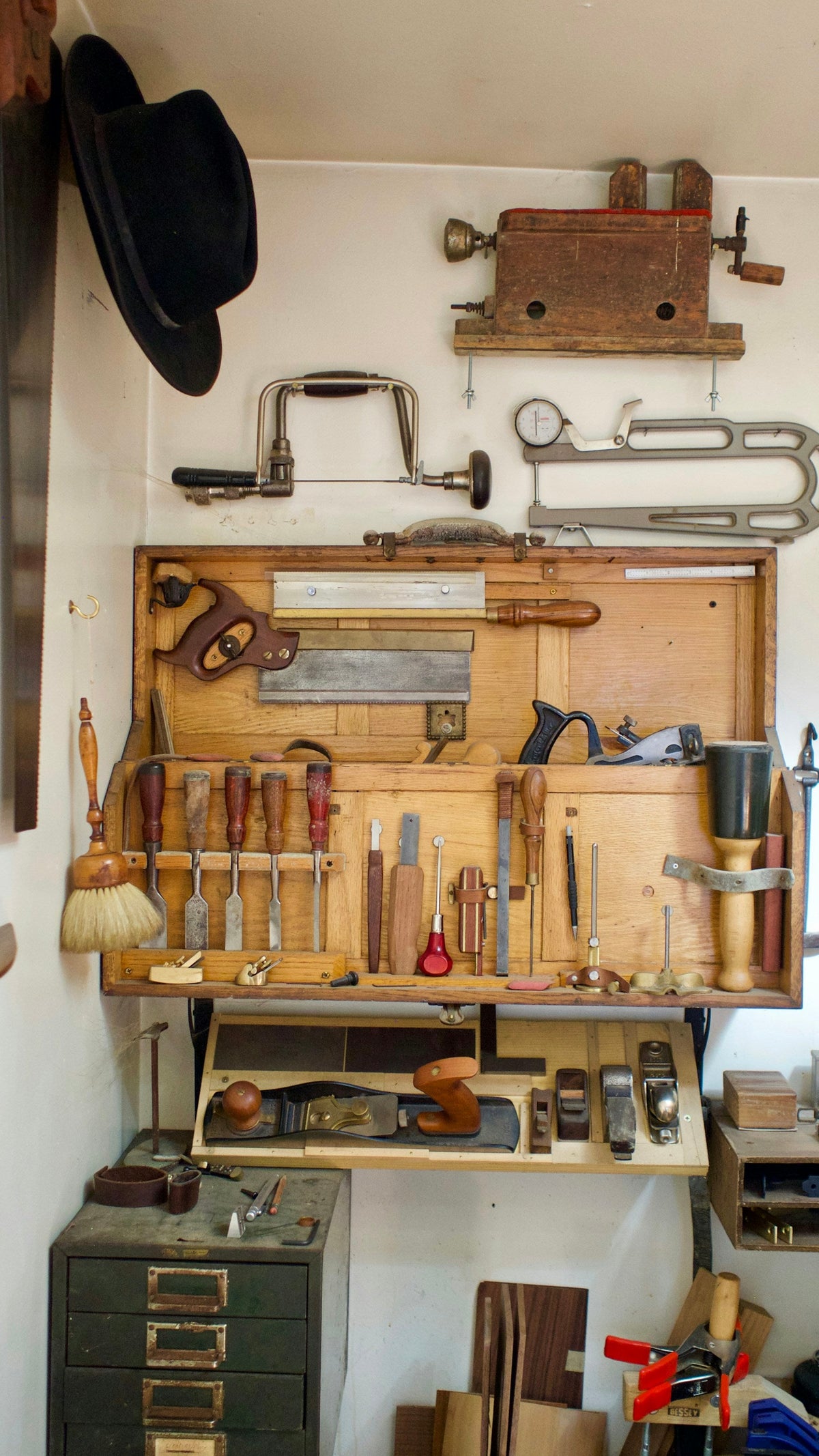
The modern world has never contained more information about how to do things. It has also never made it easier to avoid actually learning how.
A broken tap becomes a search result. A flat tyre becomes a tutorial. A bad meal becomes a delivery order. A wrong turn becomes a blue dot. A forgotten fact becomes a prompt.
That is progress. It is also producing a strange new scarcity.
The person who can actually do something — calmly, physically, correctly, without waiting for a screen to tell him what comes next — is becoming more valuable.
Knowledge became cheap
For most of history, practical knowledge travelled slowly. You learned from a parent, an apprenticeship, a neighbour, a trade, a workplace or years of repetition. Information itself was scarce.
The internet inverted that. Now the instructions for almost anything are available within seconds. AI pushes that further: explanations can be personalised, translated and simplified instantly.
That is extraordinary. But it changes where the premium sits.
When information is scarce, knowing matters. When information is abundant, execution matters more.
The difference between knowing and being able
You can watch a hundred videos about changing a tyre and still freeze the first time you are kneeling beside a car in the rain.
You can read about first aid without being comfortable taking control of a real situation. You can save recipes without knowing how to build a meal from whatever is actually left in the cupboard. You can understand the theory of navigation and still be useless when the signal disappears.
Competence is information that has survived contact with reality.
It contains judgement, muscle memory, patience, improvisation and the ability to recognise when the textbook answer does not fit the problem in front of you.
La nota de campo
Del argumento a la acción.
Usa el artículo como punto de partida para tus propias preguntas.
The men who still know how
Look around almost any community and there are still people who carry this kind of capability quietly.
The mechanic who hears an engine and already has three possibilities in his head. The builder who can look at a wall and understand what sits behind it. The cook who can turn cheap ingredients into a proper meal without measuring anything. The neighbour who owns the right tools and knows when not to use them.
The phrase “men who still know how” is not an argument that competence belongs to men. It is a reference to an archetype that is disappearing: the person whose usefulness is obvious when something physical needs doing.
Women have always carried enormous stores of practical knowledge too — food preservation, nursing, sewing, household management, agriculture, childcare, finance and countless trades. The wider point is the same: societies become fragile when practical capability is outsourced until almost nobody nearby retains it.
Convenience removed the repetitions
Skills are usually built through inconvenience.
You learn directions because you have to remember them. You learn basic maintenance because replacing everything is expensive. You learn to cook because takeaway is not always available. You learn to repair because somebody cannot arrive tomorrow.
Modern life removed many of those repetitions. In most circumstances that is a win. Nobody needs to romanticise hardship.
But remove enough friction and eventually you remove the circumstances in which competence develops.
AI changes the equation again
AI can make people far more capable. Used properly, it can accelerate learning, explain unfamiliar systems and place expert-level reference material in almost anyone's hands.
But there are two possible futures.
In one, AI becomes a teacher. People use it to understand, practise, build and eventually operate without constant assistance.
In the other, AI becomes another layer of outsourcing. People stop remembering, stop attempting and become highly effective only while the interface remains available.
The first person becomes stronger because of technology.
The second becomes more dependent on it.
The competence stack
Not everyone needs to become a carpenter, paramedic and diesel mechanic. That would be absurd.
But a useful adult competence stack is wider than most modern CVs suggest.
- Cook several basic meals from ordinary ingredients.
- Understand basic household maintenance and know when a professional is required.
- Use simple hand tools safely.
- Navigate familiar areas without continuous GPS guidance.
- Know basic first aid and keep training current.
- Understand your household finances without an app doing all the thinking.
- Know how to stop, diagnose and simplify a problem before throwing money at it.
- Be physically capable enough to move, carry, walk and help.
- Speak to strangers, ask for help and contribute something useful in return.
None of this is glamorous. That is precisely the point.
Competence creates calm
The most valuable part of practical knowledge may not be the task itself.
It is what happens to your mind when something goes wrong.
If you have solved physical problems before, the first response is less likely to be panic. You look. You isolate the problem. You ask what still works. You identify what you can control.
That psychological pattern transfers.
Competence is a kind of earned confidence because reality has already tested it.
Communities remember what individuals forget
No person can know everything. Resilience has never required that.
Historically, communities worked because capabilities overlapped. One person repaired. Another grew. Another organised. Another cooked. Another knew the local terrain. Another had transport. Another knew everybody.
Digital systems can connect millions of people, but they cannot replace the value of somebody useful being nearby.
That makes community itself part of the competence stack.
The Defalco Dealings view
The future does not belong to people who reject technology.
It belongs to people who can use extraordinary technology without allowing it to hollow out everything underneath.
Learn with AI. Search the internet. Buy better tools. Use modern medicine. Pay specialists. Let machines remove pointless work.
Then take some of the time you saved and learn how to do something real.
When everyone can access the instructions, the advantage belongs to the person who can still execute.
The men — and women — who still know how are not relics.
They may be early examples of something becoming valuable again.
Llévalo a la vida real
Tres ideas para llevarte.
Esta lista no envía tus selecciones. Se reinicia al recargar la página; marcar una casilla no evalúa tus competencias.
Moving to Italy: how to plan a useful scouting trip
A three-day research itinerary for comparing everyday life in two Italian neighbourhoods, with practical checks for housing, transport, work and community.
Leer el artículo →Find your Defalco Dealings guide: relocation, cities, language and preparedness
Choose the right Defalco Dealings format for your move, trip, first conversations, household planning or personalised research brief.
Leer el artículo →Build an offline planning folder before you need it
A straightforward way to organise useful documents, household checklists and preparedness reading without turning preparation into a prediction.
Leer el artículo →