Defalco Dealings / On Our Radar
Italy's 'No Meloni Day': Why Students Are Taking to the Streets
ITALY / EUROPEAN UNREST — 19 OCTOBER 2026 | DEFALCO DEALINGS REPORTING & ANALYSIS
Italian students are not simply protesting Prime Minister Giorgia Meloni as a personality. They are arguing about the kind of country they expect to inherit: its schools, its spending priorities, and who belongs in its classrooms.
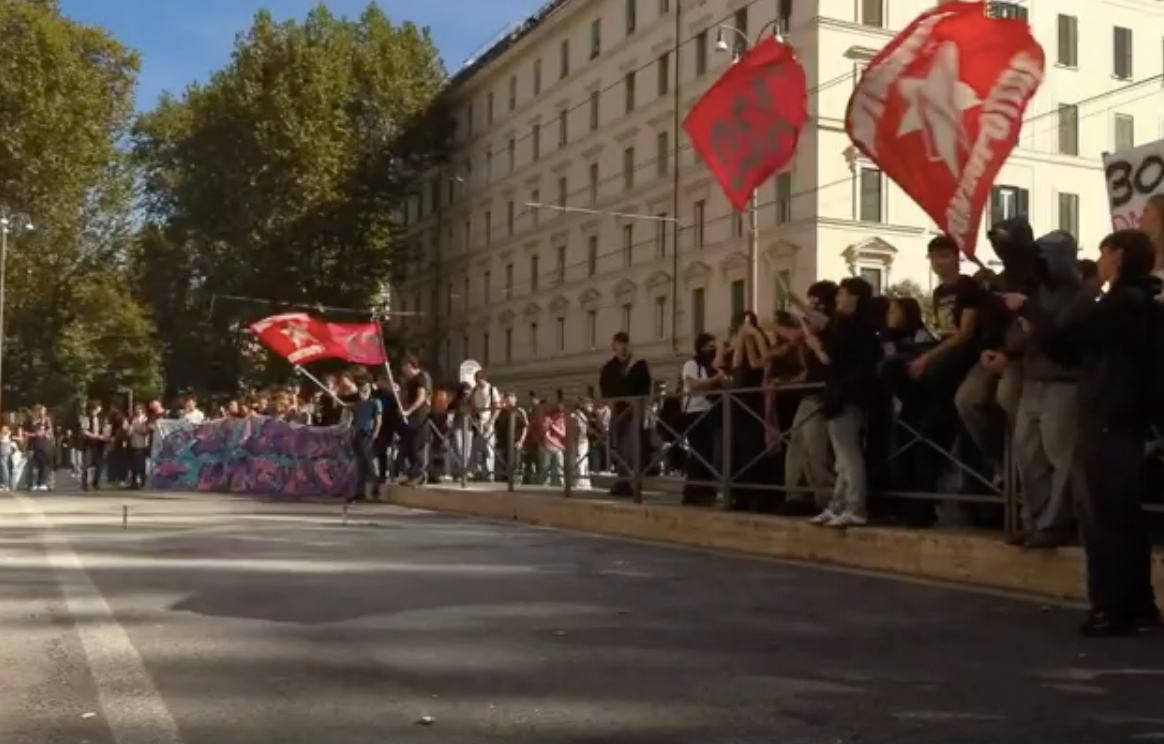
On Friday, 16 October, marches took place in Rome, Turin, Milan, Florence and other cities under the banner of No Meloni Day and related student campaigns. ANSA reported slogans calling for more investment in education rather than armaments, objections to perceived deterioration in school facilities, and criticism of government policy relating to foreign pupils.
What the students are demanding
The issues overlap, but they are not interchangeable. Some young demonstrators describe ageing or poorly maintained school buildings and want more resources for education. Others object to government proposals affecting the proportion of foreign students in classrooms. Anti-war groups criticise spending on weapons while public services are under pressure.
The international context matters. Demonstrators explicitly referenced the protests that had been building in France. But the Italian marches were not a single imported French campaign: they also reflected arguments over Italy’s own schools, living costs and politics.
What happened on 16 October?
ANSA documented marches across the country. In Turin, stones and eggs were thrown towards police during tense scenes. In Rome, the news agency reported that a small group of masked individuals hurled firecrackers and other objects near the Education Ministry. Milan also saw a student march under the slogan Nessuno è straniero—nobody is a foreigner—with reporting earlier in the day describing the procession as peaceful.
These distinctions matter. Serious incidents occurred, and they should not be minimised. But reporting on violence involving small groups does not establish that every participating student supported it, or that every march unfolded in the same way.
La note de terrain
De l’argument à l’action.
Prenez l’article comme point de départ de vos propres questions.
Meloni's dilemma
Meloni condemned violence and challenged opposition figures over what she regarded as insufficient denunciation of the clashes. The government has a clear responsibility to protect pupils, residents and emergency workers from attack. It also faces a separate political question: whether the specific grievances about schools, spending and inclusion will receive an answer beyond policing.
The two tasks do not cancel each other out. A government can defend public order and still acknowledge peaceful criticism; protesters can demand better public services without excusing assaults or destruction.
A demonstration can be a warning about public confidence without being a vote of no confidence from the whole country.
Do not confuse the student movement with the Milan riots
The street disorder that developed in Milan on 17–18 October grew out of broader cost-of-living demonstrations and included looting and damage. Those events deserve their own investigation; automatically merging them with school protests obscures both stories.
What to watch next
Look for concrete government responses on school funding, the contested classroom policies and the conduct of both demonstrators and police. Claims about protester numbers should be attributed to the organisations making them, not presented as settled facts. The longer-term test is whether Italy's young people believe the state is listening.
Related reading: Milan After the Marches and Why Europe Is Protesting.
Sources & editorial note
- ANSA — nationwide student marches and Meloni's response, 16 October 2026
- ANSA — city-by-city reports, 16 October 2026
- ANSA English — reports of clashes, 16 October 2026
Updated 19 October 2026. This article distinguishes reported events, government statements and Defalco Dealings editorial analysis. Developments and investigation figures may change.
Cover photograph: Italian students demonstrating outside the Education Ministry, Rome, 17 October 2026; Vene14 via Wikimedia Commons, CC0 1.0. The image is from the same protest period; the article also discusses events on 16 October.
Passer à la pratique
Trois idées à retenir.
Cette liste n’envoie pas vos choix. Elle se réinitialise au rechargement ; cocher une case n’évalue pas vos compétences.
Moving to Italy: how to plan a useful scouting trip
A three-day research itinerary for comparing everyday life in two Italian neighbourhoods, with practical checks for housing, transport, work and community.
Lire l’article →Find your Defalco Dealings guide: relocation, cities, language and preparedness
Choose the right Defalco Dealings format for your move, trip, first conversations, household planning or personalised research brief.
Lire l’article →Build an offline planning folder before you need it
A straightforward way to organise useful documents, household checklists and preparedness reading without turning preparation into a prediction.
Lire l’article →